Rust Livestock

Cows, bulls and sheep: tame them, feed them, breed better genes and sell them on. What each animal gives, how often, and how the Stablehand sets his price.
- Milk per milking
- 1
- every 5 min from a tame cow
- Wool per shearing
- 10
- every 5 min, a quarter per swing
- Time to tame
- 5 min
- within 20 m of it
- Calf
- 300 scrap
- lamb 150 scrap, from the Stablehand
What each animal gives
| Animal | HP | Gives | Ready again | Dung every | Grows up / lives | Harvest |
|---|---|---|---|---|---|---|
 Cowfemale Cowfemale | 450 | 5 min | 10 min | 2 days | ||
| Bullmale | 450 | - | - | 10 min | 2 days | |
| Calfyoung | 450 | - | - | - | 60 min | - |
 Sheepboth sexes Sheepboth sexes | 150 | 5 min | 10 min | 2 days | ||
| Lambyoung | 150 | - | - | - | 60 min | - |


Average (Ok) genes; times vary 10% either way. A bull or a young animal gives no milk, a lamb no wool and a young animal's corpse nothing. Each swing shears one quarter of the fleece (2, 3, 2, 3 Wool). A dead sheep's corpse holds its unshorn wool: 10 with 0 quarters shorn, 8 with 1 quarter shorn.
Milk and wool by genes
| Yield genes | Milk per harvest / ready again | Wool per harvest / ready again |
|---|---|---|
| Bad | 1 / 8 min | 6 / 8 min |
| Ok | 1 / 5 min | 10 / 5 min |
| Good | 2 / 3 min | 16 / 3 min |
| Good inbred | 1 / 5 min | 10 / 5 min |
| Ok inbred | 1 / 6 min | 8 / 6 min |
Both copies of the Yield gene as shown. Shear with any of these: Skinning Knife, Prototype Hatchet, Bone Knife, Obsidian Bone Knife, Abyss Metal Hatchet, Frontier Hatchet, Butcher Knife, Sickle, Vampire Stake, Hatchet, Combat Knife, Sunken Combat Knife, Salvaged Axe.
Taming: how trust builds
| Trust | Time near it | What changes |
|---|---|---|
| Known | 5 s | A curious cow or calf follows you without a lead. 20% of livestock are born curious. |
| Tolerated | 30 s | A bull stops squaring up to you. |
| Bonded | 5 min | Tame. You can lead it, a cow can be milked, and it ages, drops dung and breeds. Bring it inside the range of a cupboard you are authorised on and that cupboard becomes its home. |
| Herd | 15 min | A bull counts you as one of his herd and goes after whoever attacks you. |
Time counts while you are within 20 m and it can sense you. A curious cow or calf learns 2x as fast. Shepherds Pie: 2x for 15 min. Rich Shepherds Pie: 2.5x for 15 min.
- Hurting it costs 60 s of trust; hurting one of its herd costs 30 s. It stays wary of you for 45 s and moves off when you come within 8 m.
- Trust short of Bonded fades once you leave: all 5 min of it in 20 min. Bonded trust never fades. An animal remembers up to 8 players.
- Your team, and players authorised on its home cupboard, start at 60 s of trust with an animal you have bonded with. So does anyone who ate a Shepherds Pie, while it lasts.
- Lead a bonded animal by interacting with it. The lead breaks past 7 m and slows you down when it pulls tight. To move them by car: the Flatbed Vehicle Module carries sheep and lambs; the Large Flatbed Vehicle Module carries cows, bulls, calves, sheep and lambs.
- A mother defends her calf for 5 min after something threatens it.
Food, water and room
| Need | How it is met | How fast it drops |
|---|---|---|
| Food | Grazing fills it to full, 4x as fast as it drops. A trough fills it to 80% at most. | Full to empty in 17 min while it is up and about by day; slower while it rests, sleeps or at night. |
| Water | A river or lake edge 0.05 to 0.5 m deep, or fresh water in a container: Water Barrel, Powered Water Purifier, Water Pump, Large Water Catcher, Small Water Catcher, Water Purifier, Above Ground Pool, Paddling Pool or Hitch & Trough. One drink fills it. | Slowly. A drink from a container takes up to 200 water, less the fuller the animal is. |
| Room | Up to 8 herd mates within 20 m, and no more than 2 grown animals within 2.5 m. | Drops with each herd mate past 8, as far as it goes at 12. Packed tighter than 5 grown animals in 2.5 m, it falls toward zero at 9. |
Animals look for food and water within 25 m. A young animal takes up 50% of a grown one's room.
- Condition is the animal's health. With its lowest need at 50% or more (average Hardiness), it heals at a rate that takes it from nothing to full in 60 min of daylight. Below that, health falls toward a lower level; a fully neglected animal goes from full to dead in 60 min of daylight. An animal nobody has tamed never falls below 50%.
- Breeding stops at 60% condition and starts again at 70%. Under 15% it drops no dung, and below 80% dung slows down, to 3x slower at the floor.
- Grass runs out. 2 grazes in one 5 m square leave the grass within 5 m bare for 30 min. Spread the herd out or feed it at a trough.
- They graze within 25 m, on grass or forest ground in arid, temperate, tundra or jungle biomes. Anywhere else, feed them at a trough.
- Wild cows and bulls roam temperate or tundra biomes in groups of 1 to 4, about 2 per square km (32 on a 4 km map).
- Wild sheep roam temperate or tundra biomes in groups of 2 to 6, about 2 per square km (32 on a 4 km map).
Trough food
| Food | Calories | Fills |
|---|---|---|
 Brioche Bread Brioche Bread | 190 | 46% |
 Bread Loaf Bread Loaf | 150 | 36% |
 Potato Potato | 125 | 30% |
 Birthday Cake Birthday Cake | 100 | 24% |
 Pumpkin Pumpkin | 80 | 19% |
 Corn Corn | 75 | 18% |
 Wheat Wheat | 75 | 18% |
 Granola Bar Granola Bar | 60 | 14% |
 Black Raspberries Black Raspberries | 40 | 10% |
 Apple Apple | 30 | 7% |
 Blueberries Blueberries | 30 | 7% |
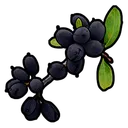 Black Berry Black Berry | 5 | 1% |
 Blue Berry Blue Berry | 5 | 1% |
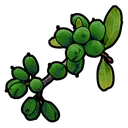 Green Berry Green Berry | 5 | 1% |
 Honeycomb Honeycomb | 5 | 1% |
 Red Berry Red Berry | 5 | 1% |
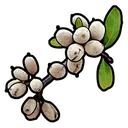 White Berry White Berry | 5 | 1% |
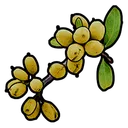 Yellow Berry Yellow Berry | 5 | 1% |
 Grub Grub | 3 | 1% |
 Worm Worm | 1 | 0% |
The Hitch & Trough holds 6 stacks of food and 5000 water, with 2 spots to tie up. Animals eat the same food a chicken coop takes, one item at a time.
Genes
| Gene | What it changes | Bad | Ok | Good | Good, inbred |
|---|---|---|---|---|---|
| Dung | How often it drops dung | x0.6 | x1 | x1.6 | x1 |
| Longevity | How long a grown animal lives | x0.65 | x1 | x1.5 | x1 |
| Yield | Milk or wool per harvest, and how soon it is ready again | x0.6 | x1 | x1.6 | x1 |
| Fertility | How soon it breeds again, and the chance of twins | x0.65 | x1 | x1.6 | x1 |
| Hardiness | How well it copes when short of food, water or room | x0.7 | x1 | x1.5 | x1 |
Above 1 is better: more often, longer, more, sooner. Inbred, an Ok gene works at the halfway point, for example x0.8 for Yield. Dung with average genes every 10 min, with Good Dung genes every 6 min.
- Every animal carries two copies of each of the 5 genes, each Bad, Ok or Good. The better copy is the one that shows.
- A newborn takes one copy of each gene at random from its mother and one from its father. Two Good copies always pass on Good; a Good and a Bad copy pass on Bad half the time.
- Wild animals roll each copy: 20% Good, 30% Bad, the rest Ok. Bred genes never change at random.
- Each animal also carries two of 16 family markers, one from each parent. When both match, the animal is inbred and every gene counts for less. Breeding close kin raises the chance; a wild animal is inbred 1 time in 16.
Livestock breeding calculator: pick the genes each parent shows and see the odds for every gene of the young, a perfect animal and an inbred one.
Breeding and growing up
| Mother | Pregnancy | Young grows up | Mother rests | Grown life span |
|---|---|---|---|---|
| Cow | 10 min | 60 min | 66 min | 2 days |
| Sheep | 10 min | 60 min | 66 min | 2 days |
Average genes. Fertility shortens the rest; Longevity stretches the life span.
- To breed, both animals must be tame, grown and of one species, with every need above half and condition above 60%. A male looks for a female within 30 m and walks over to her.
- After mating a male waits 10 min before he breeds again.
- One young per birth. A mother with Good Fertility has a 60% chance of twins; never more than 3.
- A newborn is bonded to everyone its mother is bonded with. A young animal grows into a grown one of its sex; a grown one dies of old age at the end of its life span. Late in life it slows down, keeps closer to home and rests longer.
- Only a tame animal ages. A wild one stays the age it is.
Selling to the Stablehand
- The Stablehand stands at Ranch or Large Barn. He buys grown animals that are not pregnant and that you bring to him on your lead, and Wool once you carry 25 or more.
- Bartering: pick an animal and he makes an offer. Turn it down and he makes another, 3 in all, all set the moment you pick it. Turn down the last and he will not look at that animal for 15 min.
- Each offer pays up to 2 items from his list and the rest in Scrap. An offer can be 5% above or below what the animal is worth. 5% of offers are generous: 10% to 25% of a perfect animal's price on top.
- Wool sells by the lot: up to 400 at a time, priced by how full the lot is. A full lot is worth 450 Scrap.
What sets the price
| Factor | Effect |
|---|---|
| Species | Cow x1, Sheep x0.6 |
| Genes | The average of the five gene multipliers |
| Condition | Full price from 80%, down to 40% of it at 15% |
| Age | Full price for the first 50% of its life, down to 50% at the end |
| Bred by a player | 20% off for an animal no player bred. A bought calf or lamb counts as not bred. |
The factors multiply. 1.5 or more is a perfect animal: 700 Scrap worth.
What a grown animal is worth
| Animal | Genes | Condition | Quality | Worth in Scrap |
|---|---|---|---|---|
| Cow | Bad | 100% | 34% | 238 |
| Cow | Ok | 100% | 53% | 373 |
| Cow | Ok | 50% | 39% | 269 |
| Cow | Ok | 15% | 21% | 149 |
| Cow | Good | 100% | 83% | 582 |
| Sheep | Bad | 100% | 20% | 143 |
| Sheep | Ok | 100% | 32% | 224 |
| Sheep | Ok | 50% | 23% | 161 |
| Sheep | Ok | 15% | 13% | 89 |
| Sheep | Good | 100% | 50% | 349 |
Caught wild, in its prime, all five genes as shown. A player-bred one is worth a quarter more, up to the perfect price.
What he offers
| Goods | Quality | Most common items, with the average amount |
|---|---|---|
| Animal | 25% | |
| Animal | 53% | |
| Animal | 80% | |
| Animal | 100% | |
| Wool lot | 25% | |
| Wool lot | 53% | |
| Wool lot | 80% | |
| Wool lot | 100% |




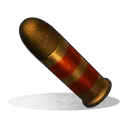
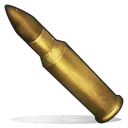
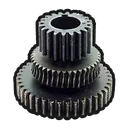


Under each item: the share of offers it was in. Scrap is in almost every offer, paying what the items leave over.
Buying calves and lambs
| Animal | Scrap |
|---|---|
| Calf, female | 300 |
| Calf, male | 300 |
| Lamb, female | 150 |
| Lamb, male | 150 |
It arrives bonded to you and on your lead.
Methodology
Tested in game on our own server: we milked a cow and sheared a sheep with Bad, Ok, Good and inbred Yield genes, bought each calf and lamb, killed each animal for its corpse, priced grown animals at several conditions, and had the vendor draw 400 offers at each quality. Tested on the current version of Rust.
Related pages
Rust livestock: common questions
- How do you tame a cow or sheep in Rust?
- Stay within 20 m of it. After 5 min it is bonded: it counts as tame and you can lead it. Shepherds Pie makes it 2x faster for 15 min. Hurting it sets you back 60 s.
- How much milk does a cow give in Rust?
- 1 Milk per milking, then 5 min until she is ready again, with average genes. With Good Yield genes: 2 every 3 min. Only a tame, grown cow gives milk; bulls and calves give none.
- How do you get wool in Rust?
- Shear a grown sheep with Skinning Knife, Prototype Hatchet, Bone Knife, Obsidian Bone Knife, Abyss Metal Hatchet, Frontier Hatchet, Butcher Knife, Sickle, Vampire Stake, Hatchet, Combat Knife, Sunken Combat Knife or Salvaged Axe. Each swing takes one quarter of the fleece (2, 3, 2, 3), 10 Wool in all. It grows back 5 min after the last cut.
- How do you breed cows in Rust?
- Tame a grown male and female, keep them fed, watered and not crowded, and keep their condition above 60%. The male finds her within 30 m. A cow is pregnant for 10 min and the young grows up in 60 min.
- Where is the Stablehand in Rust?
- At Ranch and Large Barn. He buys grown animals that are not pregnant, and Wool from 25 up. He sells calves for 300 scrap and lambs for 150 scrap.
- How does bartering with the livestock vendor work?
- He makes up to 3 offers for each animal or wool lot, one after another, all set when you pick it. Each pays up to 2 items plus Scrap. Turn them all down and he ignores that animal for 15 min.
- What does inbred mean for Rust livestock?
- Each animal carries two of 16 family markers, one from each parent. When they match, it is inbred and every gene counts for less: a Good gene works like Ok. A wild animal is inbred 1 time in 16.
- What do cows and sheep eat in Rust?
- They graze grass. In a Hitch & Trough they eat the same food a chicken coop takes, such as Brioche Bread, Bread Loaf and Potato, which fills them to 80% at most.